Loading this medicine

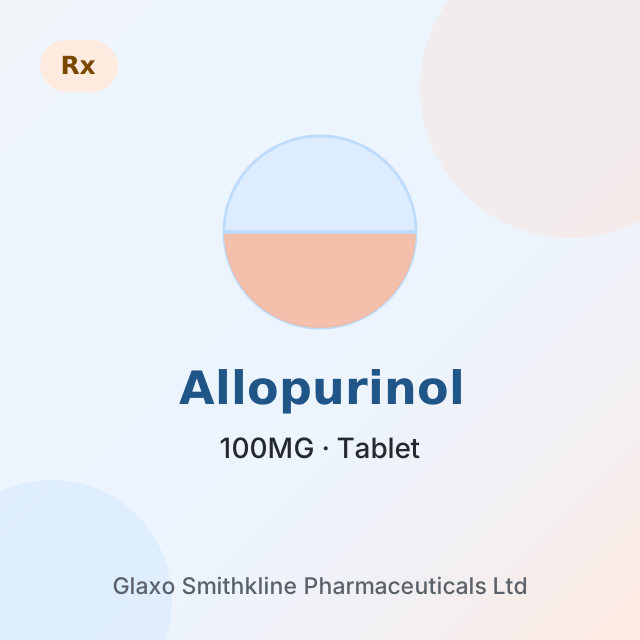
Illustration only
by Glaxo Smithkline Pharmaceuticals Ltd
Allopurinol 100MG Tablet
₹19.85
100MG · 10 TABLET(s) IN A STRIP
Inclusive of all taxes
Delivery calculated at checkout
Upload your prescription after ordering. Your order is confirmed after pharmacist approval.
Cancelled if no prescription is received within 72 hours. Nothing charged before delivery.
Allopurinol tablets are indicated for: The management of adults with signs and symptoms of primary or secondary gout (acute attacks, tophi, joint destruction, uric acid lithiasis, and/or nephropathy) The management of adult and pediatric patients with leukemia, lymphoma and solid tumor malignancies who are receiving cancer therapy which causes elevations of serum and urinary uric acid levels The management of adult patients with recurrent calcium oxalate calculi whose daily uric acid excretion exceeds 800 mg/day in male patients and 750 mg/day in female patients, despite lifestyle changes (such as reduction of dietary sodium, non-dairy animal protein, oxylate rich foods, refined sugars and increases in oral fluids and fruits and vegetables) Limitations of Use Allopurinol tablets are not recommended for the treatment of asymptomatic hyperuricemia. Allopurinol tablets are a xanthine oxidase inhibitor indicated for the management of: Adult patients with signs and symptoms of primary or secondary gout (acute attacks, tophi, joint destruction, uric acid lithiasis, and/or nephropathy) Adult and pediatric patients with leukemia, lymphoma and solid tumor malignancies who are receiving cancer therapy which causes elevations of serum and urinary uric acid levels Adult patients with recurrent calcium oxalate calculi whose daily uric acid excretion exceeds 800 mg/day in male patients and 750 mg/day in female patients, despite lifestyle changes Limitations of Use Allopurinol tablets are not recommended for the treatment of asymptomatic hyperuricemia.
Source: US FDA prescribing information, via openFDA. Provided for general information only — it is not a substitute for your doctor's or pharmacist's advice. Always follow your prescriber's instructions.
Skin Rash and Hypersensitivity: Allopurinol has been associated with serious and sometimes fatal dermatological reactions. Discontinue Allopurinol tablets at the first appearance of skin rash or other signs of hypersensitivity reaction. Gout Flares: May occur during initiation of treatment. Concurrent prophylactic treatment with colchicine or anti-inflammatory agents is recommended. Nephrotoxicity: Allopurinol may affect kidney function. Patients with decreased kidney function require lower doses of Allopurinol tablets. Hepatoxicity: Cases of reversible hepatotoxicity have occurred. If signs and symptoms of hepatotoxicity develop, evaluate liver function. Myelosuppression: Bone marrow suppression has been reported with Allopurinol. Potential Effect on Driving and Use of Machinery: Drowsiness, somnolence and dizziness have been reported in patients taking Allopurinol tablets. Skin Rash and Hypersensitivity Serious and sometimes fatal dermatologic reactions, including toxic epidermal necrolysis (TEN), Stevens-Johnson syndrome (SJS), and drug reaction with eosinophilia and systemic symptoms (DRESS) have been reported in patients taking Allopurinol. These reactions occur in approximately 5 in 10,000 (0.05%) patients taking Allopurinol. Other serious hypersensitivity reactions that have been reported include exfoliative, urticarial and purpuric lesions, generalized vasculitis, and irreversible hepatotoxicity. Discontinue Allopurinol tablets permanently at the first appearance of skin rash or other signs which may indicate a hypersensitivity reaction. The HLA-B58:01 allele is a genetic marker for severe skin reactions indicative of hypersensitivity to Allopurinol. Patients who carry the HLA-B58:01 allele are at a higher risk of Allopurinol hypersensitivity syndrome (AHS), but hypersensitivity reactions have been reported in patients who do not carry this allele. The frequency of this allele is higher in individuals of African, Asian (e.g., Han Chinese, Korean, Thai), and Native Hawaiian/Pacific Islander ancestry. The use of Allopurinol tablets is not recommended in HLA- B58:01 positive patients unless the benefits clearly outweigh the risks. Consider screening for HLA-B5801 before starting treatment with Allopurinol tablets in patients from populations in which the prevalence of this HLA-B5801 allele is known to be high. Screening is generally not recommended in patients from populations in which the prevalence of HLA-B58:01 is low, or in current Allopurinol users, as the risk of SJS/TEN/DRESS is largely confined to the first few months of therapy, regardless of HLA- B*58:01 status. Abridged from the full prescribing information.
Source: US FDA prescribing information, via openFDA. Provided for general information only — it is not a substitute for your doctor's or pharmacist's advice. Always follow your prescriber's instructions.
The following clinically significant adverse reactions are described elsewhere in the labeling: Skin Rash and Hypersensitivity Nephrotoxicity Hepatoxicity Myelosuppression Potential Effect on Driving and Use of Machinery The following adverse reactions associated with the use of Allopurinol tablets were identified in literature, unpublished clinical trials or postmarketing reports. Because some of these reactions were reported voluntarily from a population of uncertain size, it is not always possible to reliably estimate their frequency or establish a causal relationship to drug exposure. The most frequent adverse reaction to Allopurinol tablets is skin rash. Most Common Adverse Reactions (≥ 1%) Gastrointestinal: Diarrhea, nausea, alkaline phosphatase increase, AST/ALT increase. Metabolic and Nutritional: Acute attacks of gout. Skin and Appendages: Rash, maculopapular rash. Less Common Adverse Reactions (< 1%) Body As a Whole: Ecchymosis, fever, headache, malaise. Cardiovascular: Necrotizing angiitis, vasculitis, pericarditis, peripheral vascular disease, thrombophlebitis, bradycardia, vasodilation. Gastrointestinal: Hepatic necrosis, granulomatous hepatitis, hepatomegaly, hyperbilirubinemia, cholestatic jaundice, vomiting, intermittent abdominal pain, gastritis, dyspepsia, hemorrhagic pancreatitis, gastrointestinal bleeding, stomatitis, salivary gland swelling, hyperlipidemia, tongue edema, anorexia. Hemic and Lymphatic: Thrombocytopenia, eosinophilia, leukocytosis, leukopenia, aplastic anemia, agranulocytosis, eosinophilic fibrohistiocytic lesion of bone marrow, pancytopenia, prothrombin decrease, anemia, hemolytic anemia, reticulocytosis, lymphadenopathy, lymphocytosis. Musculoskeletal: Myopathy, arthralgias, myalgia. Nervous: Peripheral neuropathy, neuritis, paresthesia, somnolence, optic neuritis, confusion, dizziness, vertigo, foot drop, decrease in libido, depression, amnesia, tinnitus, asthenia, insomnia. Respiratory: Epistaxis, bronchospasm, asthma, pharyngitis, rhinitis. Skin and Appendages: Erythema multiforme exudativum (Stevens-Johnson syndrome), toxic epidermal necrolysis (Lyell's syndrome), hypersensitivity vasculitis, purpura, vesicular bullous dermatitis, exfoliative dermatitis, eczematoid dermatitis, pruritus, urticaria, alopecia, onycholysis, lichen planus, furunculosis, facial edema, sweating, skin edema. Special Senses: Taste loss/perversion, cataracts, macular retinitis, iritis, conjunctivitis, amblyopia. Urogenital: Renal failure, uremia, nephritis, impotence, primary hematuria, albuminuria. Abridged from the full prescribing information.
Source: US FDA prescribing information, via openFDA. Provided for general information only — it is not a substitute for your doctor's or pharmacist's advice. Always follow your prescriber's instructions.
Supportive & Palliative Care
50MG
₹302
View medicine
Supportive & Palliative Care
6MG
₹7,796
View medicine
Supportive & Palliative Care
3MG
₹64.97
View medicine
Supportive & Palliative Care
50MG
₹1,776.56
View medicine